6, 8, 9, or 12 (?) kinds of wild blueberries in the Olympics?
There are quite a few species of blueberries in the Olympic Mountains. A number of plant identification books describe them, but somewhat confusingly they don’t all describe the same list. So how many are there? Most importantly, which species is the tastiest, that’s what we really want to know?
First of all, scientists organize blueberries into the Vaccinium genus, a member of the heath family (Ericaceae). Red huckleberries are part of this family, so even though they are red, they in the blueberry, or Vaccinium family. (There’s a black one too.)
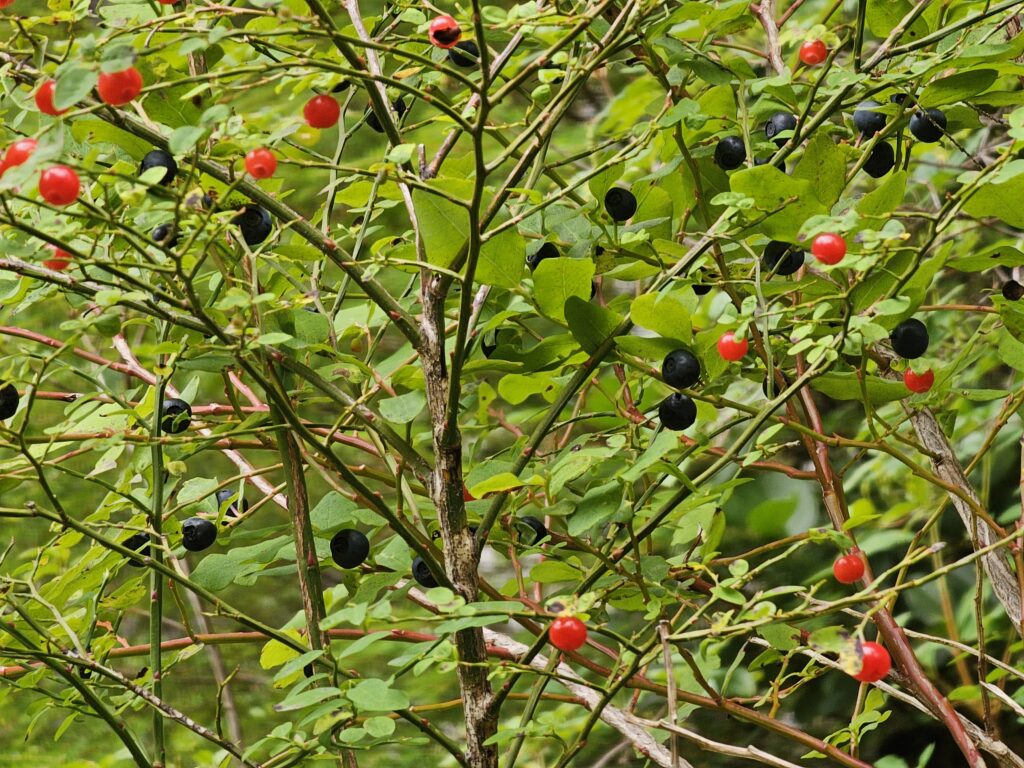
6 are specifically identified by Doug Benoliel, author of Northwest Foraging: A guide to edible plants of the Pacific Northwest (1974). He identifies red and blue huckleberries (Vaccinium parvifolium and Vaccinium membranaceum, respectively). Other authors call Vaccinium membranaceum a black huckleberry. A third one is bog cranberry (Vaccinium oxycoccos), although others say this is a cranberry, not a blueberry. The fourth is evergreen huckleberry (Vaccinium Ovatum) which lives in the coastal forests, and makes a lovely ornamental plant, as it never loses its leaves. The sixth one Doug identifies is Grouseberry (Vaccinium scoparium), or whortleberry, as being in the blueberry family, but its probably only in the Cascade mountains, not the Olympics. He says that in total, there are 12 species of blueberries in the northwest.
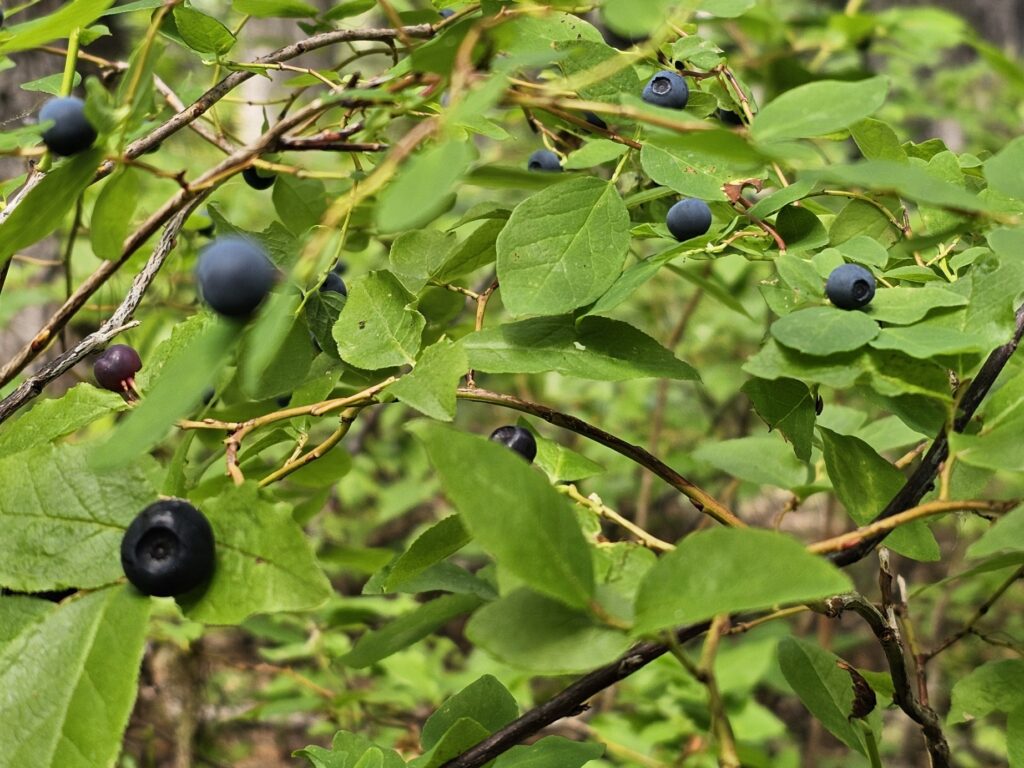
8 according Douglas Deur, in his book Pacific Northwest Foraging (2014). He identifies the lingonberry (Vaccinium vitis-idaea) as a type of cranberry, but within the blueberry family. He thinks the bog huckleberry (Vaccinium uliginosum) is one of the sweetest blueberries.
9 according to Mark Turner and Phyllis Gustafson, authors of Wildflowers of the Pacific Northwest (2006). Turner and Gustafson claim there is a Cascades blueberry which has two variants, Vaccinium caespitosum, and the larger variety as Vaccinium deliciosum. Deliciosum is Latin for delicious! (Is that one the best?)
One of the best books to identify Olympic Flowers, and to take hiking (it’s easy to carry), is Charles Stewart’s Wildflowers of the Olympics and Cascades (1988). It’s out of print, but you can still find it on Amazon.com. While he does a nice job with plant descriptions, pictures, and a brief historical note about most plants, and kept his book small for easy carrying, he doesn’t identify every flower or berry. He does identify two Vacciniums. He describes the oval-leaf huckleberry (Vaccinium ovatum). And also what he calls a blue-leaf huckleberry (Vaccinium Deliciosum), his personal favorite.
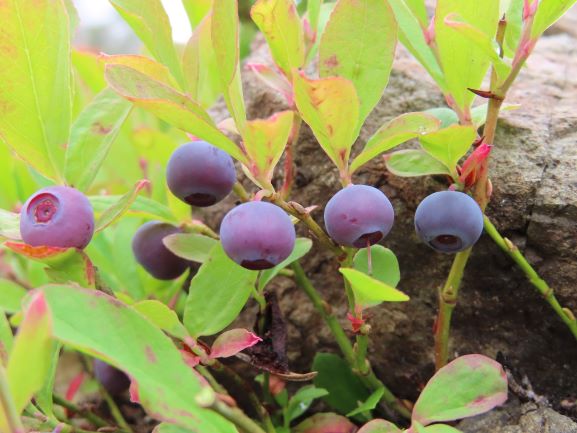
So how many species are there?
8species (and two subspecies with the same common name), according to Pojar and MacKinnon, who seem to have the most technical and comprehensive book. At a hefty 528 pages, their book is Plants of the Pacific Northwest, revised (2014) (10 total authors). It covers Washington, Oregon, Alaska and British Columbia. Here’s their list:
- Vaccinium alaskaense, Alaskan blueberry
- Vaccinium caespitosum, dwarf blueberry
- Vaccinium deliciosum, , blue-leaved blueberry, or Cascade huckleberry, which is very similar to dwarf blueberry
- Vaccinium membranaceum, black huckleberry
- Vaccinium ovalifolium, oval-leaved blueberry
- Vaccinium Ovatum, evergreen huckleberry
- Vaccinium parvifolium, red huckleberry
- Vaccinium uliginosum, bog blueberry, and two subspecies Vaccinium occidentale and Vaccinium pubescens, also called bog blueberry
- (Oxycoccos oxycoccos (sometimes called Vaccinium oxycoccos), bog cranberry, actually a cranberry so it doesn’t make the list for the total number of blueberry species)
And the best blueberry of all?
Pojar and MacKinnon claim dwarf blueberry (vaccinium caespitosum) was the preferred blueberry by indigenous people. It also goes by the common names of Blue-leaved and Cascade huckleberry (and the scientific name Vaccinium deliciosum). The other authors above use one of these names, and they all seem to agree it’s best tasting blueberry. Dwarf blueberry is a good name, in my opinion, because they only grow to a maximum height of about 12 inches tall.
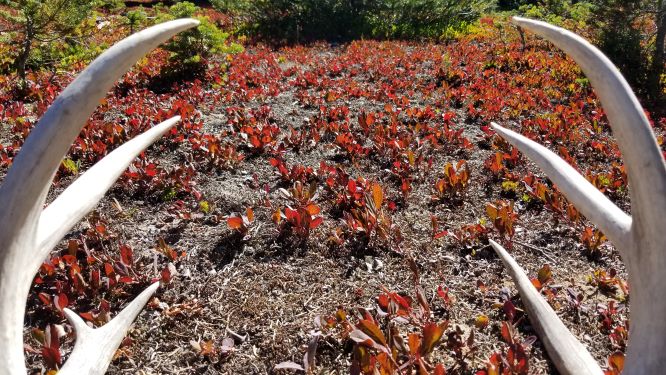
For me, the blueberries on the very short dwarf blueberry plants, 2-6 inches tall (in the picture above), are the best of the best. I’m going with the scientific name Vaccinium deliciosum because they are deliciousis, the sweetest of all! Maybe this is because they have been “pruned”, or eaten down, by the deer and bear, and perhaps their root systems are much larger than the plant. If so, it could be that these shorty plants can concentrate a lot of energy from their root systems into a few berries packed with a lot of fruit sugar.
The second runner up might be the black huckleberry (Vaccinium membranaceum). This tasty berry is not only sweet when fully ripe, it’s very juicy and one of the largest wild blueberries.
However you count them, there’s a lot of wild blue-black-red-orange Vaccinium berries up in them there hills. Most become ripe in July, August, and September (depending on variety and elevation). Finding, identifying, and eating wild blueberries is a great nature experience for kids, and an excellent SNACCMS activity for building moral fiber.
Cautionary notes:
Ripe berries are pretty easy to identify as being in the blueberry family once you get a sense of what a blueberry bush is like. All the blue and black berry varieties taste like a blueberry. To be certain, the best way to identify edible plants is usually by the flower description, using a good guide book. Charles Stewart’s and Doug Benoliel’s books are easy to slip into a day pack.
On the dwarf blueberries, especially the 2-6″ shorties, you’ll often notice deer and bear scat near these plants, so there may be a risk these berries have been exposed to other animal excrements. Washing before eating might be advisable.
Bears love them too
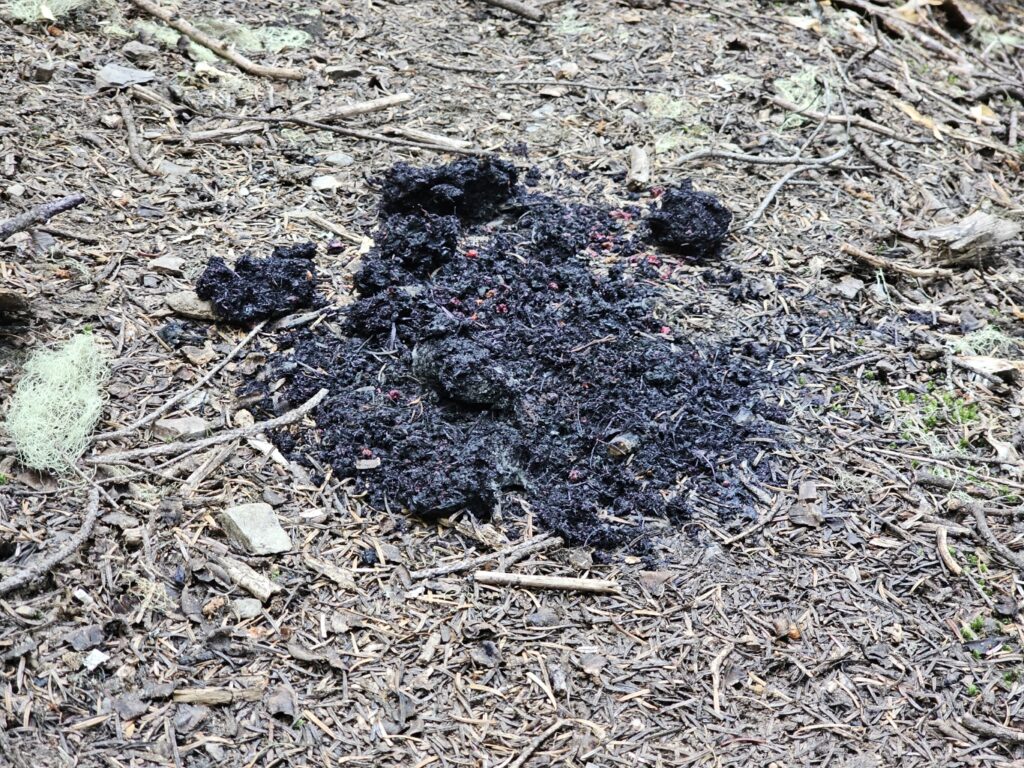
When ripe, black bears of the Olympics seem to eat nothing but blueberries. At least according to their scat.
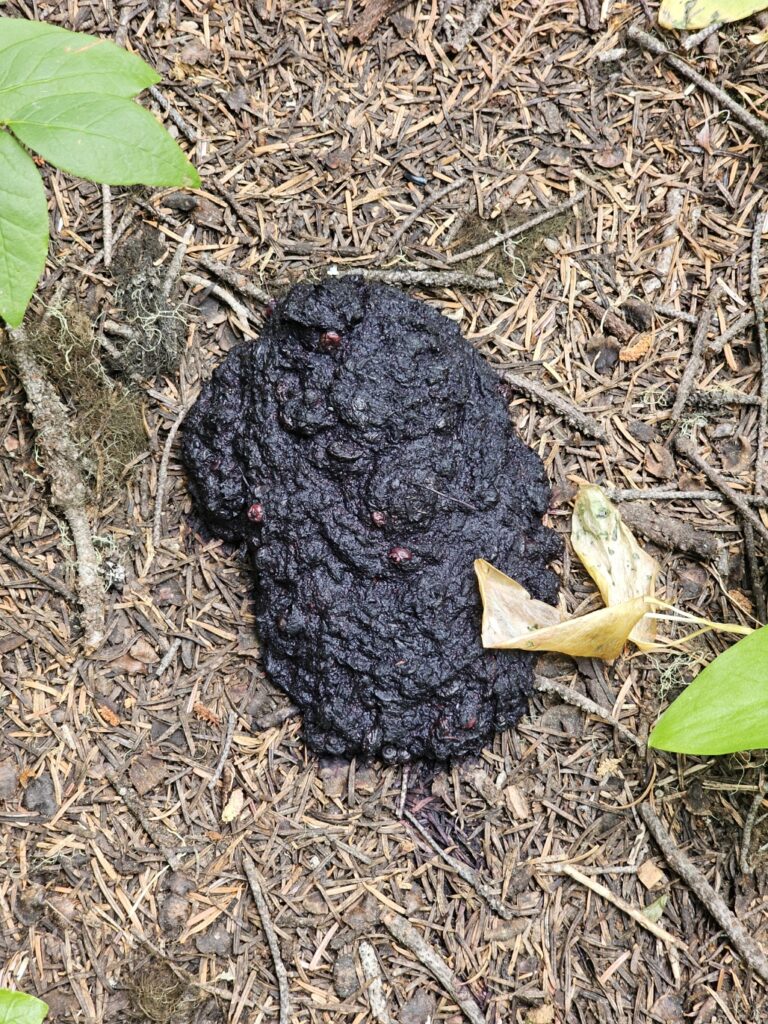
When these “blueberry poops” dry out, there’s nothing much left.
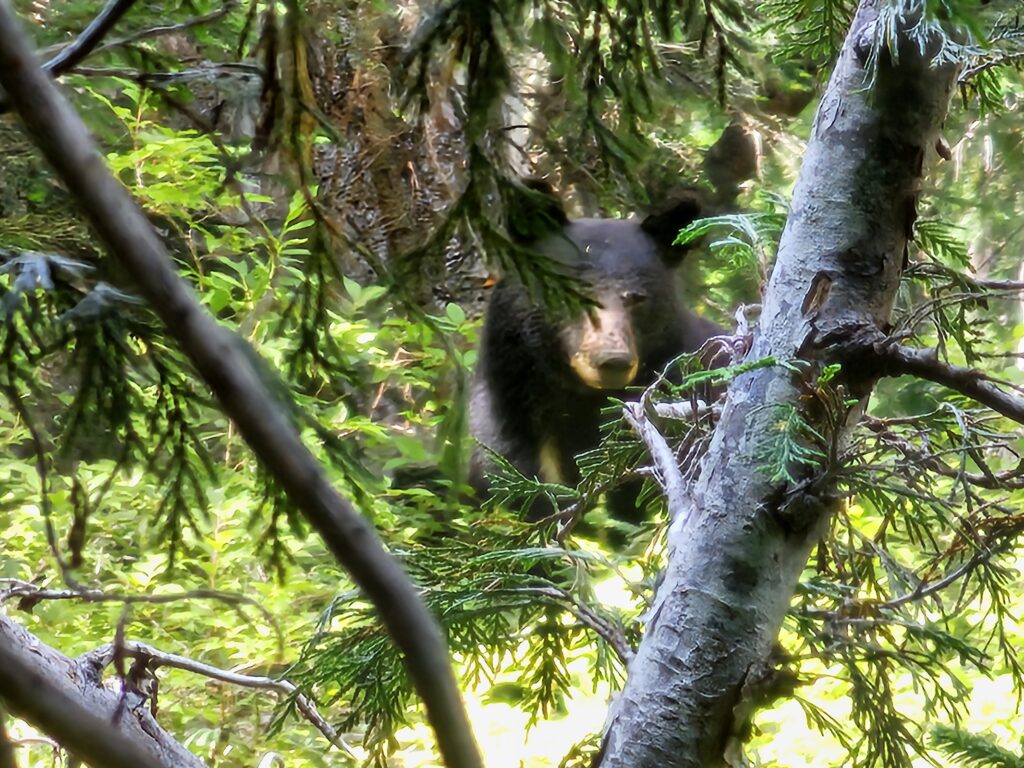
Be mindful of the black bears when you go to hunt for blueberries. Black bears are afraid of humans so they tend to run away if they see you. There are no grizzly or brown bears in the Olympics, which are definitely dangerous bears. We only have black bears.
What do you think? How many species can you find? Which one do you think is the sweetest. Drop us a note with your thoughts.
Law is an important service to the health of our community. Parenting is even more important.
By Mark Baumann
This article is a ClallamCountyBar.com local feature article.